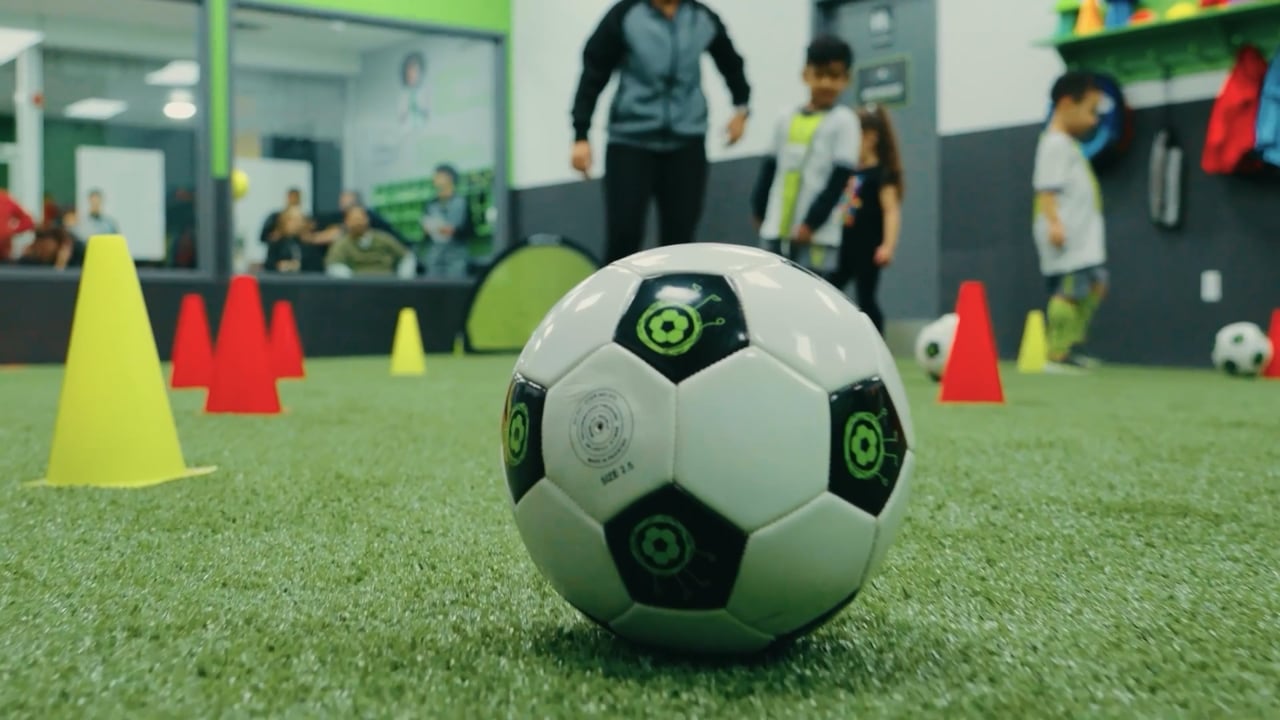
Our fundamental category consists of three Drills to Skills programs, which are perfect for beginner-level players and provide the fundamentals for essential soccer and life skills. With age-based programs - Drills to Skills Junior (Ages 3.5–5), Drills to Skills (Ages 5–6), and Drills to Skills PRO (Ages 6–9) - children learn at the right pace for their age. technical and personal growth, these programs give every child the foundation they need to progress confi dently into our advanced programs when they are ready for more complex challenges and technical play.

DTS Junior

(recommended age: 3.5 - 4.0 years)

emblem

As our foundational program, Drills To Skills JR is where we introduce the core pillars of the sport. While we maintain a strong focus on technical ability, proper execution, and movement skills, our approach is specifically adapted to early childhood development. To keep young players engaged, we utilize play-based learning heavily driven by imagination and storytelling. Additionally, to accommodate shorter attention spans, sessions are designed with a fluid rather than rigid structure. This dynamic environment allows us to focus on high repetition, maximizing touches on the ball through fun, engaging exercises that never feel like "work."
Drills to Skills

(recommended age: 5.0 - 6.0 years)

emblem

This program shifts toward a more structured and progressive training style that effectively bridges the gap between recreational play and competitive sport. During this stage, players begin developing refined techniques in dribbling, passing, and shooting, while also being introduced to small-sided activities like 1v1s to build confidence under pressure. Throughout the program, we maintain a deliberate balance between a fun atmosphere and an increased focus on proper execution and tactical understanding.

DTS Pro

(recommended age: 7.0 - 9.0 years)

emblem

In Drills To Skills Pro, the fundamentals remain the same, but the expectations and complexity are significantly heightened for players ready to bridge the gap between skill and strategy. Exercises become more challenging, requiring a higher level of physical and mental engagement, while the coaching shift places a heavy emphasis on applying technical skills within game-like situations rather than in isolation. By prioritizing small-sided games, we encourage independent decision-making, ultimately helping players connect their refined technical skills to the demands of real-time match play.